Flooring Guide
How Many Vinyl Planks Do I Need?
Planning a vinyl plank flooring project usually comes down to one practical question: how many vinyl planks do I need?
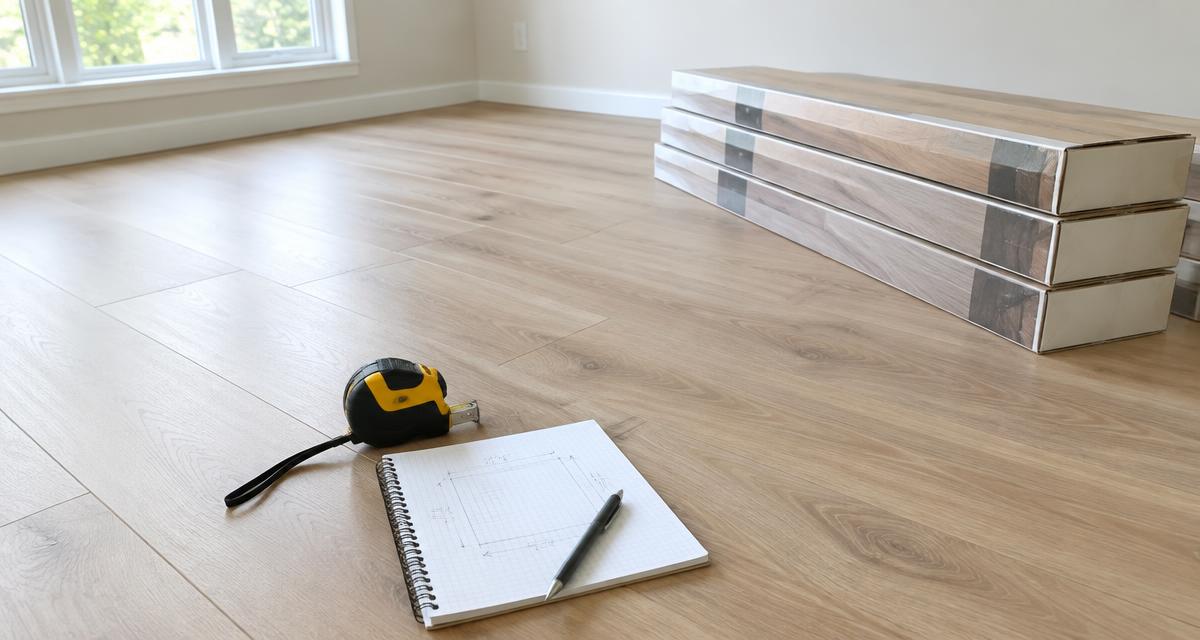
The answer depends on the size of the floor, the size of each plank, the number of planks or square feet contained in each box, and the amount of extra material you allow for cuts and waste.
There are two common ways to calculate vinyl plank flooring:
- calculate how many boxes you need using the coverage per box
- calculate how many individual planks you need using the size of each plank
For most purchases, calculating by box coverage is the easiest and most reliable method because vinyl plank flooring is normally sold in complete cartons.
The basic formula is:
Boxes Required = Total Flooring Required ÷ Coverage per Box
You should then round the answer up to the next full box.
You can also use the BuildCalcWorks Vinyl Plank Flooring Calculator to estimate your project automatically.
How to Calculate How Much Vinyl Plank Flooring You Need
The easiest method is:
- measure the floor area
- add an appropriate allowance for cuts and waste
- find the coverage per box
- divide the total required flooring by the box coverage
- round upward
The formula is:
Boxes Required = Flooring Required ÷ Coverage per Box
The waste allowance should normally be included before calculating the final number of boxes.
Step 1: Calculate the Floor Area
For a rectangular room:
Floor Area = Length × Width
If you need help measuring your space, see: How to Calculate Square Footage for Flooring
or use the BuildCalcWorks Flooring Calculator.
Step 2: Add a Vinyl Plank Waste Allowance
Buying exactly the same square footage as your measured floor area may leave too little material.
Extra vinyl plank flooring may be needed for:
- end cuts
- wall cuts
- doorways
- closets
- corners
- irregular spaces
- damaged planks
- unusable offcuts
- installation mistakes
- layout requirements
For many straightforward vinyl plank projects, around 10% extra is a useful planning starting point.
However, there is no single waste percentage that applies to every vinyl product or installation.
Some manufacturers and product calculators use higher allowances, particularly to account for installation errors and unforeseen circumstances.
Always check the installation guidance for the specific vinyl plank flooring you plan to use.
For a more detailed explanation, see: How Much Extra Flooring Should You Buy?
Vinyl Plank Waste Formula
Use:
Flooring Required = Floor Area × (1 + Waste Percentage ÷ 100)
Step 3: Find the Coverage per Box
Check how much floor area one carton covers.
This is normally listed on:
- the box
- product specification sheet
- retailer listing
- manufacturer's website
One product might contain:
18.9 sq ft per box
Another might contain:
23.4 sq ft
Another might contain:
28.6 sq ft
There is no universal box coverage for vinyl plank flooring.
Coverage varies according to:
- plank width
- plank length
- number of planks per carton
- product specifications
Always use the stated coverage for the exact flooring product you are purchasing.
Step 4: Calculate the Number of Boxes
Use:
Boxes Required = Flooring Required ÷ Coverage per Box
Always Round Vinyl Plank Boxes Up
Vinyl plank flooring is normally sold in complete cartons.
If your calculation produces part of a box, always round upward.
Examples:
8.1 boxes → 9 boxes
11.4 boxes → 12 boxes
16.95 boxes → 17 boxes
Rounding down would leave you with less flooring than your calculated requirement.
Complete Vinyl Plank Flooring Example
Suppose your living room measures:
15 ft × 19 ft
The vinyl plank flooring you have selected covers:
22.75 sq ft per box
You plan to use a:
10% waste allowance
How to Calculate the Number of Individual Vinyl Planks
Sometimes you may want to estimate the actual number of planks rather than just boxes.
To do that, first calculate the area of one plank.
Use:
Plank Area = Plank Length × Plank Width
The measurements must be converted into compatible units.
However, flooring is normally purchased by carton, so you should still convert the final project requirement into boxes using the manufacturer's stated carton coverage.
Individual Plank Calculation Formula
Use:
Planks Required = Flooring Required ÷ Area per Plank
If the result is not a whole number, round upward.
Why Calculating by Box Is Usually Better
Although calculating individual planks can be useful, using the stated box coverage is usually simpler.
Manufacturers already specify the total area contained in each carton.
Using box coverage reduces the risk of:
- unit conversion errors
- incorrect plank counts
- rounding mistakes
- confusion over package quantities
If the product says:
23.8 sq ft per carton
use that value whenever possible.
How Many Vinyl Planks Do I Need for Multiple Rooms?
Calculate each area receiving the same flooring.
Should You Calculate Each Room Separately?
If the same flooring is being installed continuously through several connected spaces, it is often practical to combine the total floor area before applying the waste allowance.
That may allow usable offcuts from one room to be used in another.
However, you may want to evaluate areas separately if:
- the rooms are disconnected
- flooring direction changes
- installation happens at different times
- rooms have very different shapes
- different patterns are used
The important thing is to include every area that will receive the vinyl plank flooring.
How Do You Measure an Irregular Room?
Divide the room into simple sections.
Should You Include Closets?
Yes, if the closet will receive the same flooring.
Measure and include areas such as:
- closets
- walk-in closets
- alcoves
- pantry floors
- connecting spaces
Forgetting small areas can result in a material shortage.
How Much Extra Vinyl Plank Flooring Should You Buy?
A useful starting point for many straightforward vinyl plank installations is around:
10% extra
but this should not be treated as a universal rule.
For planning purposes:
| Project Type | Example Planning Allowance |
|---|---|
| Simple rectangular room | Around 5–10% |
| Typical vinyl plank installation | Around 10% |
| Irregular or complicated room | Around 10–15% |
| Complex pattern or unusual layout | Check manufacturer guidance |
Some manufacturers may recommend more.
Always use the recommendations for your specific product when placing the final order.
Why Can Vinyl Plank Waste Vary?
Waste can increase because of:
- many corners
- narrow hallways
- angled walls
- room transitions
- pattern requirements
- damaged planks
- poor reuse of offcuts
- installation direction
- complex room geometry
A simple rectangular bedroom may create less waste than a kitchen, hallway, pantry, and multiple closets with the same combined floor area.
Square Feet vs Square Meters
The same process works with metric units.
Imperial
Length in feet × Width in feet = Square feet
Use box coverage stated in square feet.
Metric
Length in meters × Width in meters = Square meters
Use box coverage stated in square meters.
Keep the units consistent throughout the calculation.
What If the Vinyl Planks Are Different Sizes?
Different vinyl plank products can have very different dimensions.
For example, one product may use narrow planks while another uses wide or extra-long planks.
That changes:
- area per plank
- number of planks per carton
- total coverage per box
This is why you should always use the dimensions and box coverage for the exact product you are purchasing rather than relying on a generic plank count.
Do Wider or Longer Planks Mean You Need Fewer Pieces?
Usually, yes.
If each plank covers more floor area, fewer individual planks are needed for the same room.
However, the number of boxes required still depends on how many planks the manufacturer packs into each carton.
A larger plank does not automatically mean each box covers more area.
Always check the carton specification.
Should You Buy an Extra Box?
Keeping some spare vinyl planks can be helpful if you need future repairs.
A spare box or several matching planks may be useful if flooring later becomes:
- scratched
- damaged
- chipped
- stained
- affected by water
- removed during renovation work
Matching the exact floor several years later may be difficult if:
- the product is discontinued
- colors change
- production runs vary
- the finish is updated
However, you do not always need to intentionally add a full box beyond your calculated requirement.
If your waste allowance already leaves enough usable material, additional boxes may be unnecessary.
Expansion Gaps and Material Quantity
Many floating vinyl plank flooring systems require perimeter expansion space according to the manufacturer's installation instructions.
That does not mean you should subtract a large border from your room dimensions when ordering flooring.
Use the actual room measurements for material planning, then follow the flooring manufacturer's installation instructions for expansion spacing.
Common Vinyl Plank Calculation Mistakes
Ordering Only the Exact Floor Area
The project may require additional material for cuts and waste.
Using a Generic Box Size
Vinyl plank boxes do not all cover the same area.
Use the coverage printed for the exact product.
Rounding Down
If the calculation gives:
9.2 boxes
you need:
10 boxes
Forgetting Closets
Include all areas receiving the same flooring.
Mixing Units
Do not divide an area in square feet by box coverage stated in square meters.
Assuming 10% Is Always Correct
Ten percent is a useful planning starting point for many installations but may not match every manufacturer or project.
Calculating Individual Planks When Box Coverage Is Available
Using the stated carton coverage is usually easier and less prone to errors.
Forgetting to Measure Irregular Areas
Divide unusual rooms into smaller sections and calculate each one.
Related Calculators
Related Guides
Flooring
How to Calculate Square Footage for Flooring
Learn how to calculate square footage for flooring, measure rooms correctly, account for irregular areas and add waste before ordering flooring materials.
Read guideFlooring
How Much Extra Flooring Should You Buy?
Learn how much extra flooring to buy for cuts and waste, when to use 5%, 10% or 15%, and how to calculate boxes for your flooring project.
Read guideFlooring
How Many Boxes of Laminate Flooring Do I Need?
Learn how to calculate how many boxes of laminate flooring you need using room area, waste allowance and coverage per box, with easy worked examples.
Read guideFlooring
How Much Carpet Do I Need?
Learn how to calculate how much carpet you need using room dimensions, carpet roll width, seams and pattern allowance, with easy worked examples.
Read guideFrequently Asked Questions
Calculate Before You Buy
The easiest way to determine how much vinyl plank flooring you need is to work from the total floor area.
The process is:
- Measure the floor.
- Add an appropriate waste allowance.
- Check the flooring coverage per box.
- Divide the required area by the box coverage.
- Round up to the next full box.
If you want to calculate individual planks instead, divide the total flooring requirement by the area covered by one plank.
Always check the manufacturer's specifications and installation instructions before placing the final order.
For the quickest estimate, use the BuildCalcWorks Vinyl Plank Flooring Calculator to calculate your project automatically.
Disclaimer: This guide provides planning information. Actual material requirements can vary with product packaging, installation pattern, manufacturer requirements, room shape and material type. Verify measurements and product instructions before ordering. Read full Disclaimer.